
EDITH: Inst. 6
The Intellectuality of the Intended Bride
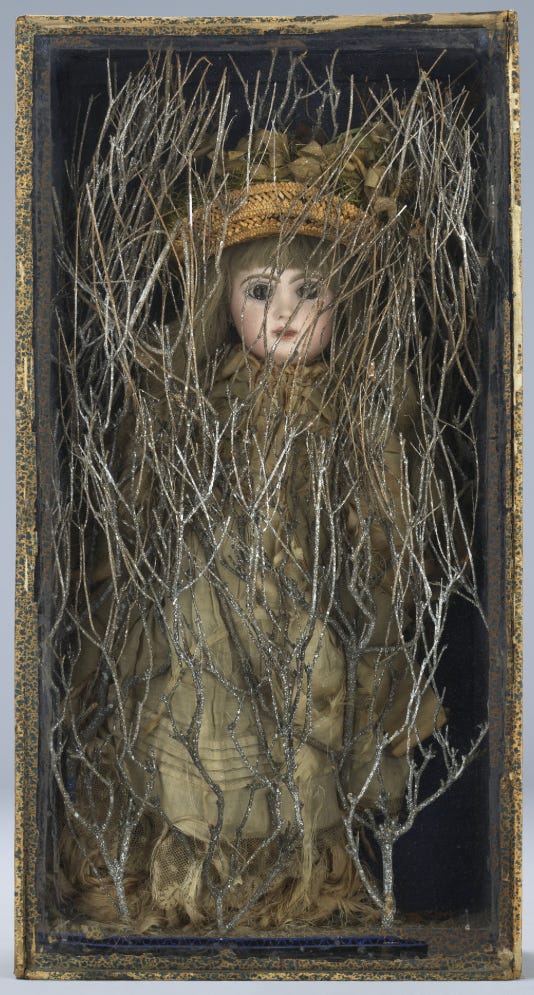
1883: Back in New York, Edith took out her white card, embossed in black, to place on the silver platter the maid brought when she and her mother got through the doors to the entrance hall. If no one could see the Jones women, Edith could place her card on the platter and leave, relieved. To her consternation, they could be seen. The mother and daughter were ushered over the threshold into the hall, the elder with poise and the younger with a sudden pallor that accentuated the blood red of her hair. Their outer garments were removed and carried away by one maid while another maid led them to the drawing room for tea.
Posture, hissed Lucretia.
The girl straightened as if slapped. The brilliance of a slap was that the surprise of its arrival never faded – nor did the humiliation. Edith could not remember the most recent visitation of Lucretia’s palm upon her face. But the verbal jabs and cuts! What a wonder she could stand straight and walk towards the drawing room, following her mother and the maid to the slow death of the afternoon.
Their arrival hushed the rustle of petticoats and the murmur of voices. Silence was the signal that the well-dressed assembly of cannibals was poised to pounce.
Edith no longer dared bring her sordid ambition to be literary to the attention of Lucretia Rhinelander Jones, let alone anyone else. Lucretia had far different ambitions, to which end she had begun her preparations for the daughter she called Pussy. The cat would be put in its place; namely, that of a wife: and not the wife of Harry Stevens. This was the destination that led them to enter a morose drawing room, red as the blood its inhabitants regularly drew from the subjects of their conversations. The simpler the subject, the subtler the blade.
On the carriage ride across town, Lucretia had prepared Edith with a few key details, such as that the hostess was of the Four Hundred, an old Dutch family, as well as which niceties to declare to their venerable hostess and which subjects to avoid. One of the first rules of conversation, according to Lucretia, was to never talk about money, and to think about it as little as possible.
Edith did not have any idea how one could talk about money: she had never even held the stuff in her hands. She had very rarely seen it with her own eyes. No, Edith did not think about money, though she sensed that it would be necessary for her to marry a man who had some: that was the only way to escape her mother. She had very nearly succeeded. Were there any young men looking especially for a literary bride?
She could see only the first step to escape before her: but one flagstone on a grassy damp path shrouded by fog. She could not envision the entire path. What if it led off a cliff? She could not think her way through the fog. Instead, she thought about the heavy cloud of ruin, a term whose specific dimensions were as unclear and unknown to her as those of yet another vague notion – love. Emelyn had not really loved her. Her bosom friend had cast her away. And Harry? She could hardly think of his name. These clouds were hovering about her; they seemed about to converge. The weather, as far as she had been instructed by her mother, was fair game for conversation.
There had been clouds converging well before their arrival, however. Edith sensed the tension in the air even as her mother seemed oblivious. Whatever had been said not only preceded the arrival of mother and daughter Jones, but seemed directly precipitated by it. The cannibals were not reviving their talk. Indeed, once Lucretia had made her little rounds and settled beside Edith on a slender couch, the room all but stuttered to another halt.
One brave woman, smiling with such rigidity her face seemed about to fall off, deigned to ask Lucretia about how she had found Cannes, before the funeral.
Lucretia gave a vague, distracted answer before focusing on her second son’s recent return from abroad. Though her account of Cutter’s return was a positive one, the women all looked at Lucretia sadly. Some even directed pitying glances in Edith’s direction. But Lucretia could play this game as well as any. She volleyed her own missives across the tea table.
Soon the game was moving quickly. Someone had copied someone else’s dress, to ill effect; another dinner was going to be held at so-and-so’s home, and there were edits to be made to the guest list; and, gradually, the conversation seemed almost to take a positive tone, in that everyone agreed on the impropriety of green silk in the current season, given the colors.
Edith had eaten three tea-sandwiches and drunk half a cup of tea when the time came to make a graceful bow and leave. Her mother was engaged in a prolonged goodbye with the hostess when Edith’s eye skipped over two whisperers; she knew to keep her glance moving so as to avoid detection, so as to allow her ears to concentrate. A stone sank in her stomach. She had heard the name Stevens.
Though Edith’s coming-out had been a matter of economy, that was not because ruin threatened. Lucretia had calculated that no amount of pomp, circumstance, and the subsequent bills would transform her daughter into a desirable butterfly. The funds would more prudently be invested elsewhere. That her daughter had inadvertently attracted money did not matter, because that money had been new.
Lucretia’s position had been formed independently of Harry Steven’s mother’s calculations, but the matriarchs ultimately agreed: the engagement must be broken. The young man had withdrawn his overtures. Town Topics ran the line:
The only reason for the breaking of the engagement…is an alleged preponderance of intellectuality on the part of the intended bride.
Perhaps it was easier to slander Edith than to point out that the Stevens family had been social climbers. Perhaps her former fiancé had made mention of her novella? Having broken his intentions towards her, had he no longer hesitated to break his promise of secrecy?
Whatever had been done had not been done by Edith, but to Edith. Yet everyone seemed to think the fault was her own. The Jones family had used their mourning as an excuse to avoid society, but their mourning had come to an end.
Shielded by her habit of being lost in thought, Edith did not draw her mother’s attention to herself; nor, really, did Lucretia even see her sitting beside her in the carriage, engaged as she was in rattling off the list of errors made here and there at tea, which she tallied up as she came to the self-satisfied conclusion that her venture out with Edith had not been an outright loss, but a draw.
A draw? The word roused Edith out of her thoughts.
Have you grown simple, Pussy? teased her mother, in relatively good humor.
No, but…
But what, child? What pallor are you about to cast on my sport?
She had done it; she must continue.
They were whispering about Harry.
Just that! sparkled Lucretia, her day not lost after all. Pussy, do not allow such whispers to occupy your mind. You will find another, more suitable man.
She did not say young man, Edith slowly realized. Her mother proceeded to hum a little tune, whether to continue her personal feelings of triumph or to shut out Edith. Perhaps both, Edith reasoned. Her mother was an efficient woman.
***
Despite the efficiency of her mother, or perhaps because of it, the intellectuality of the intended bride was not forgotten. The wagging tongues of New York relocated to Newport for the summer; the Jones women went to Bar Harbor instead. Edith did not write and kept her books in her bedroom, afraid of being found actively using her intellect. Instead, she expressed a general enthusiasm for picnics. Lucretia did not eat “out of doors.” There were ever so many picnics in Bar Harbor, and they were all out of doors.
Summer residents from various cities circulated. Boston. Portland. And there were recurring faces, names. One in particular with sun-touched, tousled hair. Tanned skin against a white linen suit.
The Easton’s weekly tea had brought him to her attention. Out on the patio in the early afternoon, stuck with her mother, Edith had seen the smiles women used to approach the young man in his white linen suit. She’d seen Mrs. Henry Hastings and Mrs. Fred Jenkins shuffling through middle-age to speak to him in youthful niceties and invite him to come to dinner. There was a delicate pause after his reply when he looked straight at Edith, as if to tell her he knew she would not be there, as if to say he wished she would.
She did not want to speak with this young man. He was too adept at pleasing everyone he spoke to. She had learned what pleasing young men could do. She did not need additional lessons.
But she could not escape him. That afternoon, Edith had been forced to spy on White Linen from behind her hat and veil and tea cup, hovering within earshot but not so close as to appear presumptuous. She reprimanded herself for her constant internal monologue, which must have played across her features.
Alter that expression on your face, her mother demanded, adding Please, and Edith complied. Once safe in her room at the rented Bar Harbor house, she returned to her monologue. If White Linen introduced himself, how would she explain her identity? Edith Newbold Jones, daughter of the deceased George Frederic and the living Lucretia Rhinelander Jones, rumored half-sister of Boxer and Cutter, poetess, writer of a novella, jilted former fiancée of the young Harry Stevens? Perhaps the summary had a postscript: jilted as much by the moneyed young man as by his mother.
But her past humiliation could not stop her imagination, not when she remembered the unspoken wistfulness in White Linen’s eyes. He was thin, too thin, despite the appearance of health. There was a sadness about his person that made women want to mother him. Edith wanted something else, but she could not put a name to it. She thought of the concept of the bosom friend, of the afternoons in Emelyn’s library. What would White Linen have done in Emelyn’s place?
Though not formally trained in any art, Edith knew to gather her resources and read deeply before deciding upon a position. Her subject had presented himself, provided clues. First was his presence, unaccompanied: his mother was an invalid, his father deceased. Second was the white linen, Irish, over the skin of the slender young man. He was too slight for sport, perhaps, which made her hope that he was bookish.
Just a boatman, snorted Lucretia, following the arc of her daughter’s gaze to its object at the next tea. Master of a catboat, she added, her tone final.
Edith suspected that White Linen had been sick as a child and read a great deal, hence the slight build, the catboat. She had a sketch: sleeves rolled up over slender brown forearms, tousled head bent over the oars before her, White Linen would row as she recited. The vision ended when he raised his eyes, blue and bright as the bay. The vision would start over, begin again.
Her former fiancé had once taken her hand from the distance across a small table, covered in decorative objects his mother had been told were valuable. Edith’s hand had been held by that of a weak-minded brat, among statuettes of cats and kittens and blushing ladies of some imitative court. She would never be so disgraced again.
***
The mornings in Maine were not quiet, for though she and her mother did not converse, the lack of sound did not create a feeling of calm. Edith’s mind often wandered the halls of her former home on West 23rd street, opening its doors and peering into rooms in search of herself, a little girl reading in secret. She had begun to wonder if she had left a half-ghost behind somewhere, for she was not feeling her mental powers at their former capacity. And while the act of putting herself in a story might have had some draining effect, she suspected the violence of her mother’s presence had withered her abilities.
Lucretia did not want her reading or writing. Lucretia wanted her daughter to find a husband. But Lucretia was slightly distracted. The recent widow had sold her West 23rd brownstone after her husband’s death at Cannes, ostensibly so that she would not have to face the grief of her husband’s absence, but actually because she had come into an inheritance of her own as well as the modest fortune her husband had held. From their summer perch at Bar Harbor, Lucretia Rhinelander Jones planned to install herself and her daughter at Washington Square until a more suitable residence could be constructed.
Edith had not seen the building plans, but she suspected her mother had not included rooms for a daughter in her discussions with the architect. There was even less likelihood of a library having been planned. She brought her eyes back to the book she’d left lying open on the coverlet. She would get out of the house. She would go for a walk.
The proper attire for a walk involved veil, hat, parasol, gloves. Edith had no desire to don all of these accouterments, but any inconvenience was outweighed by the prospect of scalding by the sun and her mother. So attired, off she went. While their summer rental had no gardens to speak of, its paths led to a private beach along the water, and this was the way Edith walked. The ocean air and the sound of the surf were preferable to the disquiet of the house, but Edith was still nervous.
HALLO called a masculine voice, jangling her discomposure further. White Linen walked towards her where she stood in the sand. His jacket hung on the crook of his arm, pinning a book to his side. He had no tie, no hat, not even shoes. She had never seen a man’s naked feet before. She could not look at them too long, for there was his hand, extended in introduction.
His grip was warm and secure, felt even through her gloves. He took the book from under his arm and held it towards her, as if he had known Whitman was her favorite poet.
Whitman, he said gently, was his favorite poet.
He knew without having to be told.
She would converse with this young man holding out a book in greeting, in friendship. She had failed miserably at what young women of her position were supposed to do, but here she might succeed. Here she might. She heard his name and could help but run it through the ladders of lineage her mother had burned into her brain. He didn’t have any money, but neither was Walter Van Rensselaer Berry the grandson of a grocer.
She returned to the summer rental and unwrapped herself in her room, a layer of wonder for each layer of muslin. First Walter gave her the book of Whitman, then he accompanied her on walks that became weekly, almost daily. He took her sailing in the harbor. They ate picnics on private beaches, shared secret jokes at public events.
He drew close, both less cautious than he should have been and not as reckless as she’d have liked. She held her breath, but he never caused her to catch it. Berry talked and talked and talked, but he never spoke the words Edith wanted to hear. She suspected that he saw something in her that was not what he wanted, for it was something he already possessed.
For the intelligent Pussy Jones, he said to her one rainy afternoon in the drawing room, handing her a small book inscribed with the same.
Her mother, nearby on the chaise longue, knew enough of Walter Berry to know his interest in her daughter was some small charity; there was no dressing up a rag, no correcting its condition, without drawing further notice to the fact that a rag is a rag is a rag. The half-prettiness of Pussy’s blush only called attention to the half that was not.
The gift was what Walter called a donneé book – one for writing down the situations and witticisms she had peppered into their conversations, setting off his friendly barks of laughter. She found the gift encouraging, if not the encouragement she wanted.
He gave her the book and he left for law school. She never got a letter. Not a single line. The book and its small pencil, attached with a silken string, would remain on her person the whole of the next season, serving as a companion when there was no one who might see the bitter humor in her situation.
It would be the confidant with whom she shared her early impressions of a particular man of leisure, one of her brothers’ old friends who began to appear in her mother’s new parlor in Washington Square. She had danced with this man at her debut. He had claimed to have once bounced her on his knee.
And in the interim, this man had come to look as if he had lost his hat or his dog or some small thing which meant more to him than to others. He looked as if he had resolved to restore gaiety to everyone around him, no matter their ignorance of his personal loss. The weather of his face ricocheted from despair to gaiety and back, with no attempt at equilibrium.
This was the word at which her eyes, scanning her donneé book for clues, would burn: equilibrium. For everyone had told her that Teddy Wharton was balanced.
Everyone had lied.
If you missed earlier chapters and/or would like to know more about my project, please check out my EDITH page.
Very interesting. I enjoyed reading the story of Edith's new adventure. And the final line!