
Works in Progress
Edwardian Lesbians, Lecture 1: Plant Lady with a pistol in her purse

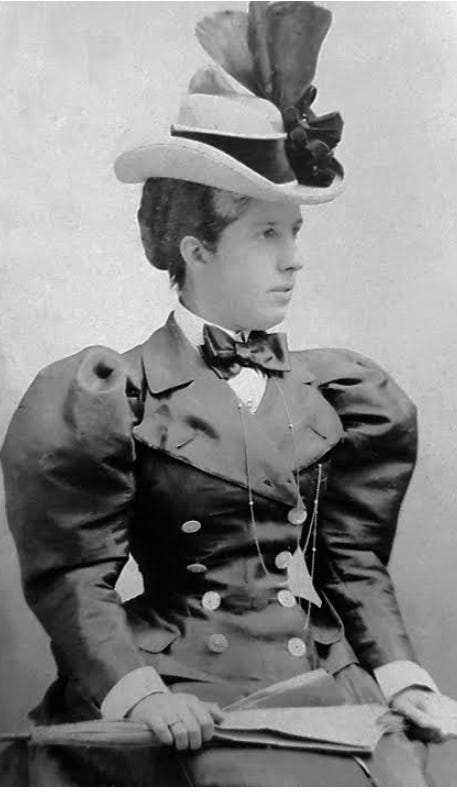
One of the happy complications of researching one dead person for a novel is that there usually were other interesting people alive at the same time. Edith Wharton was born on January 24th, 1862, and Virginia Woolf was born on January 25th, 1882, and when I first put those dates together, woo-woo me was like: all of this is connected.
Um, yeah. Woolf and Wharton were connected because they knew a lot of the same people. Exhibit A: Throw a stone at an elegant Edwardian woman, and Henry James will be sitting in the background, making witty remarks and slowly masticating his food. But post-War, post-James, Woolf and Wharton were connected in other ways, particularly through a web of brilliant, eccentric women. I want to tell the story of how these connections led to a strange day in October 1923.
To that end, I’ve drawn a highly technical diagram to help you picture the cast of characters:
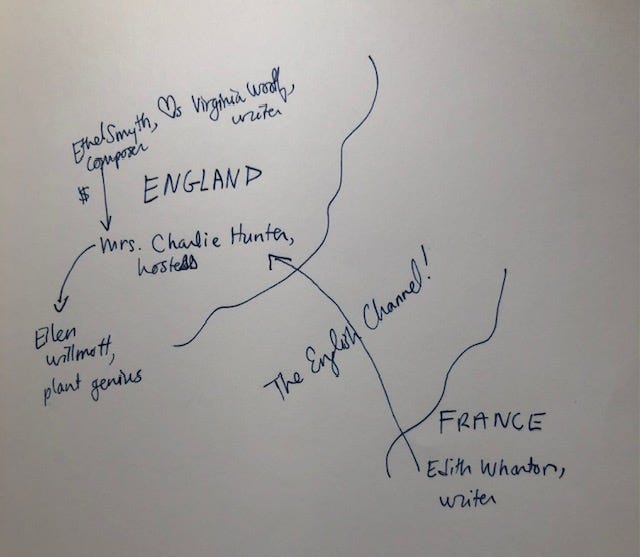
Mrs. Charlie Hunter
Let’s begin with The Hostess, a position requiring two things that are often mistaken for one: wealth and personality. In the last quarter of the 19th century, Mary Smyth married Charlie Hunter because they loved each other. But also, “I consider it my sacred duty,” Mary told her sister Ethel, “to spend every penny I can of Charlie’s money.” And there was a lot to spend, because Charlie Hunter was a thing called a coal industrialist. Hostess Credential Number One: check.
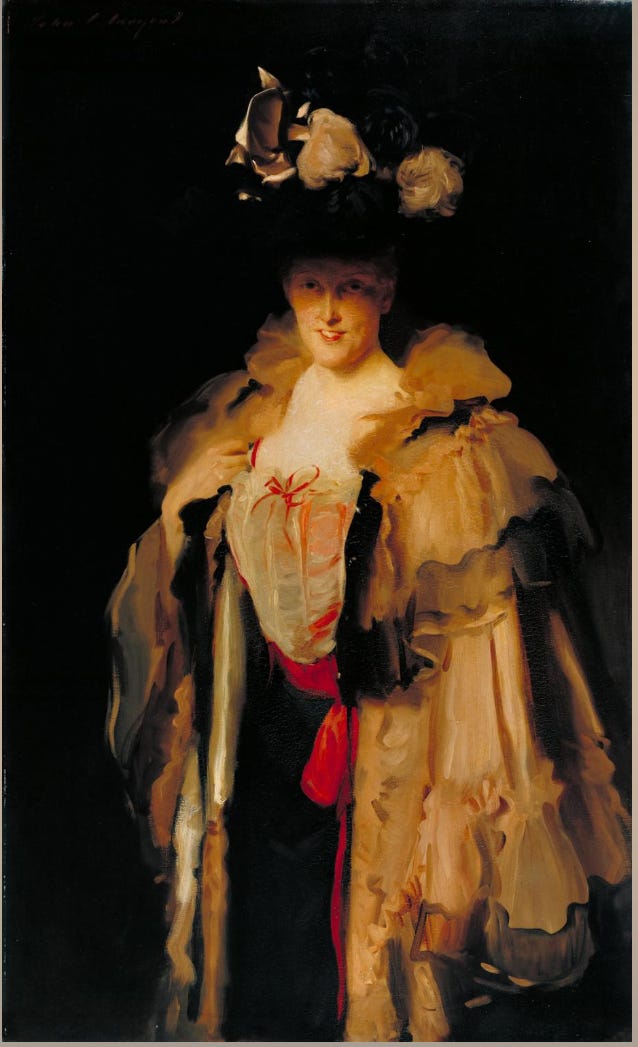
Sometime in the early 1900s, the Hunters bought a big old estate called Hill Hall, which had originally been constructed in the mid-late 1500s. Mrs. Charlie Hunter hired a decorator. According to a book about Hill Hall that I found at the NYPL, the decorator was a man named Sir Reginald Blomfield, who
severely damaged the interior of the main house. The greatest loss was the hall gallery and screen, the latter replaced by fibrous plaster Tuscan columns cladding steel…[which] were evidently marbled by none other than John Sargent, whose paintings of both Mary Hunter and her three daughters dominated the "‘lightened” hall…1
The writers of this book clearly don’t like what Mrs. Charlier Hunter did to Hill Hall; only one page later, they accuse her of being “with one or two exceptions…responsible for introducing 18th-century Chinese wallpapers into the house.” (!!!) The woman knew what she liked, which I will take as evidence of Hostess Credential Number Two: a personality. Mrs. Charlie Hunter threw lavish parties, hosting the afore-mentioned John Singer Sargent and Henry James, as well as Rodin, Monet, Elgar and anyone else who seemed cool.
Edith Wharton was one such person. If you are new to my substack and/or Edith Wharton, first of all thank you for being here! and second, please see my post, Who TF is Edith Wharton. Anyway, Mary Hunter knew Edith Wharton through Henry James, but the women also went to the same Italian spa (Salso Maggiore), Wharton grumbling in letters to friends about how the train to Salso was like the one to New Jersey2.
So Mrs. Charlie Hunter and Wharton socialized at that spa to some extent, at least before the First World War, when Mrs. Charlie Hunter turned her estate into a makeshift hospital for recovering soldiers, Mrs. Charlie Hunter’s husband dropped dead, and all of the coal money went up in smoke.
Ethel Smyth
Enter Ethel Smyth, sister of Mary Hunter and one of the few woman composers of the time. Smyth was a lot of things to a lot of people and I want to write a full post dedicated to her. But for now, let’s keep to our small cast. To Edith Wharton, Smyth was a “window-smashing woman,” because the Secretary of State for the Colonies had said that women could vote when they were all as lovely as his wife, and Ethel had a rock in her hand. She went to jail for smashing his window.
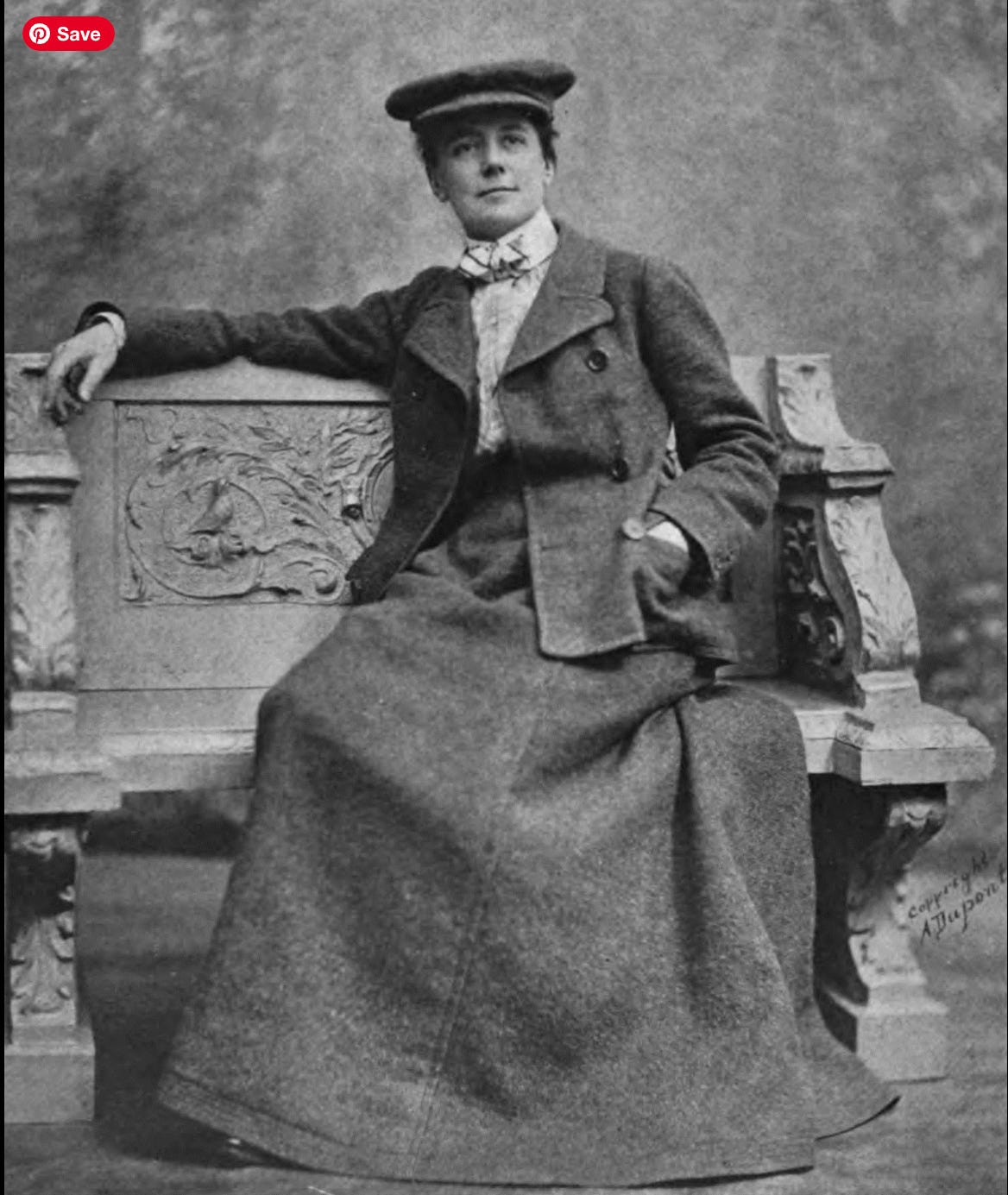
Years later, to Virginia Woolf, Smyth was a surprisingly ardent admirer; Woolf described an encounter with her as “Like being caught by a giant crab.”3 To Mary Hunter, Ethel Smyth was her post-war means of financial support. Though Ethel organized what she called a “Friends’ Fund,” her own contributions were quite generous, especially considering that Mary mostly spent money on being a hostess and never said so much as a Thank you4.
What Mary Hunter did instead of thanking her sister was invite Edith Wharton to visit. Maybe she invited Wharton because Henry James was dead, or because they both missed him, or because Wharton could get to Hill Hall with her own chauffeur and car. I don’t know, but the simplest explanation is usually the most accurate and that is: Mary Hunter and Edith Wharton were actually friends. At this point, Mary probably took a good look around post-war England and thought to herself: how the fuck am I going to entertain my fancy friend?
Ellen Willmott
Enter Ellen Willmott, friend of Ethel Smyth. They were both geniuses who gained professional recognition in their respective fields of music and botany at a time when most women were told to close their eyes and think of England.
Instead, ever since Ellen Willmott had been a child old enough to sit at the breakfast table, there had been one day a year - her birthday - when she looked at her plate and saw a cheque. Ellen had a godmother of fairytale proportions who rendered young Ellen a millionaire by the time she was a teenager. But Ellen Willmott was no ordinary teenager. She didn’t blow the checks on crap at Sephora.
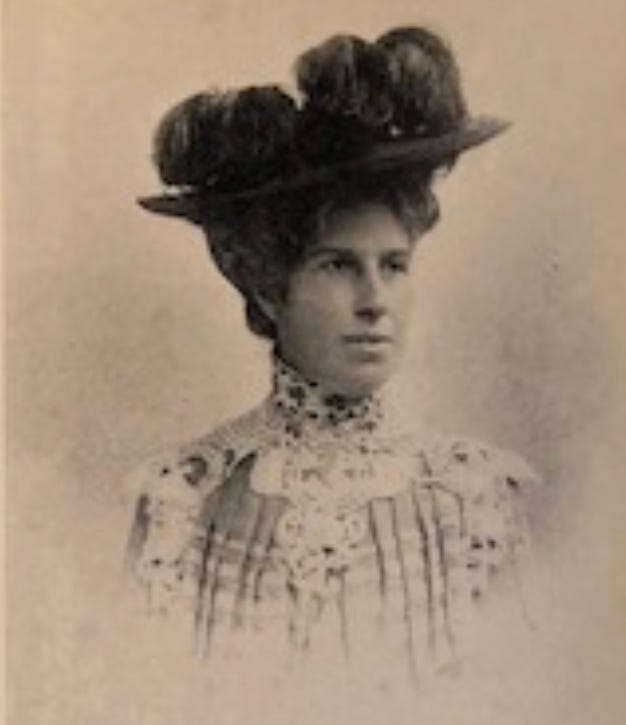
Ellen bought plants. Remember, this is the era of the hothouse and the height of the British Empire. As a millionaire with a plant obsession, Ellen Willmott used her
extensive funds … to support plant-hunting expeditions, and in the end had grown over 100,000 different species of trees, shrubs, and plants. Several species are named after her, including Veronica prostrata ‘Warley Blue’, Potentilla nepalensis ‘Miss Willmott’, and Syringa vulgaris ‘Miss Ellen Willmott’.
The name “Warley” is in reference to Ellen Willmott’s estate, Warley Place. Though her primary obsession was plants, Ellen also had an affection for old books and musical instruments and Napoleon. She had a tab at just about every major bookseller in London, building up an extensive library about all of her passions. But she didn’t stop at research: Ellen Willmott even bought an alpine hut that Napoleon had spent one night in during a campaign. I repeat, she bought Napoleon’s goddamn hut, and she put it in her gardens. As decoration.
Most of what I know about Ellen Willmott comes from a biography published in 1980 by Audrey Le Lievre: Miss Willmott of Warley Place: Her Life and Her Gardens. In this book, Ms. Le Lievre demonstrates either a strange sense of humor or intense stupidity when she wonders why “Miss Willmott” didn’t want to marry any of the nice soldiers at a nearby barracks. Most of what I know about British soldiers comes from Pride and Prejudice and Lydia Bennett.
Ellen was no Lydia, Ms. Le Lievre. Thankfully, a new biography of Ellen Willmott has since been published, which I have ordered on eBay. I’ll write a follow-up post once I’ve got my hands on it.
But back to October 1923: by the time Mary Hunter decided to bring Edith Wharton to see Ellen Willmott’s gardens at Warley place, Ellen Willmott wasn’t exactly herself, and Warley Place wasn’t exactly itself. Before the War, Ellen had employed well over a hundred gardeners, sending them scurrying around Warley Place in uniforms designed and worn according to her specifications. Most of those men were lost to the War. And though many people speculated that the War had been the reason Willmott lost her money, the real reason was much simpler: she spent it all.
So by 1923, Ellen Willmott no longer had homes in Italy and France; she no longer had indoor and outdoor staff; and she no longer had a car or a driver. To make ends meet, she would walk miles to the train, take it into London, and pawn more of her stuff. It was around this time that Ellen Willmott booby-trapped her dahlia beds and took to carrying a pistol in her purse for those long walks to the train. Once, Ellen got picked up by the police on suspicion of theft. She was allowed a phone call. Guess who she called?
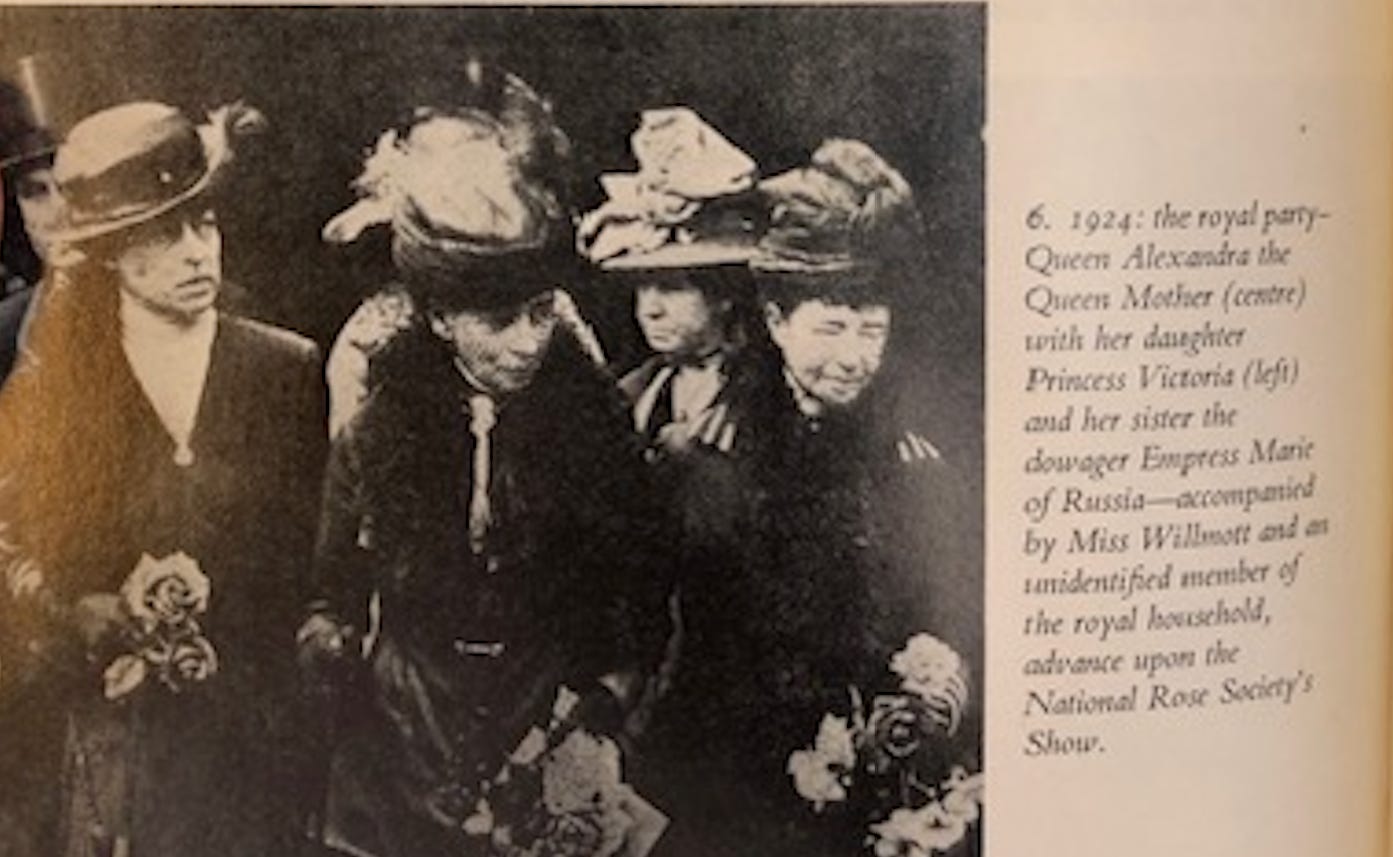
She called her old friend, The Queen of England.
So what happened?
I want to know what Mary Hunter was thinking, taking Edith Wharton to see Warley Place and, by extension, Ellen Willmott. Mary Hunter was not keen on plants; in fact,
Mary Hunter cared little for gardening; ‘she used to walk away if women talked of flower beds. There were flowers in the house, but no flower beds near it, which evidently pleased Sargent.’
So perhaps Mary Hunter took her friend to see Warley Place because she knew Edith loved gardens, even if she herself did not. Maybe she had not ever even been to Warley Place, but just knew its reputation as one of England’s most beautiful gardens. A hostess like herself would have also known that Ellen Willmott was well-connected. Maybe Mary Hunter had no idea how far the woman, or the place, had fallen.
Or maybe, to borrow a phrase, the Nile is not just a river in Egypt. Maybe Mary Hunter of Hill Hall took her dear friend Edith Wharton, visiting from Paris, to see the beautiful gardens of Warley Place, because Mary Hunter wanted to believe that nothing had changed.
But that’s the thing about writers. Even though they may practically swim in denial, they can’t help observing the world around them. Edith Wharton wrote to her niece and landscape architect, Beatrix:
Mrs. Hunter took me over with 2 or 3 people…Miss Wilmot [sic]..paid not the slightest attention to me, and I was glad she didn’t, as I felt half asleep, and couldn’t remember the name of a single plant! However, it all interested me afterward — you know how one sometimes wakes out of these trances, and finds that one has mopped up something with one’s spongy brain? The little enclosed gardens must have been lovely when they were less jungly, but the wild garden that happens suddenly in the lawn in front of the house I thought appalling. The plants, of course, were most interesting, and all in glowing health…I wish I could go back there some day with a clear brain and a notebook.
Don’t we all?
Drury, P., Simpson, R. Hill Hall: A Singular House Devised by a Tudor Intellectual, p. 323.
“I have been for three days in this Purgatory—worse than ever now, for the Italian season beats its full, & shrieking squalling Princesses, Duchesses & prostitutes encumber the ground at every step.” Edith Wharton, 1911.
Woolf scholars, please chime in - I’ve got the old editions of all Woolf’s letters and have been seriously intrigued by her relationship with Smyth, not to mention extremely irritated by the tone of the old editors’ introductions. Would also like to know what you think of the new introductions by Olivia Laing and others - are the new editions worth buying if I’ve already got a full set??
From Ethel’s memoirs: “She [Mary Hunter] must have known that I had a good deal to do with this Friends’ Fund, but never did she say one word of gratitude. She had been the rich giver, I the poor recipient, for so many years that I suppose the idea that I was helping to finance her was more than she could bear.” (Impressions That Remained, part 1, p.201)
‘Throw a stone at an elegant Edwardian woman, and Henry James will be sitting in the background, making witty remarks and slowly masticating his food.´ Made me laugh and the rest of your essay is so witty, I laughed more. Plus, learned a lot. Thank you!
Brilliant, funny and illuminating as ever. Re the Woolf letters, I did buy Vol 5 with intro by Siri Hustvedt which was... ok, but not hugely enlightening. But then I only had the Selected Letters before, so I'm pleased with my purchase and the editors say it's the unexpurgated text so that swung it for me.